
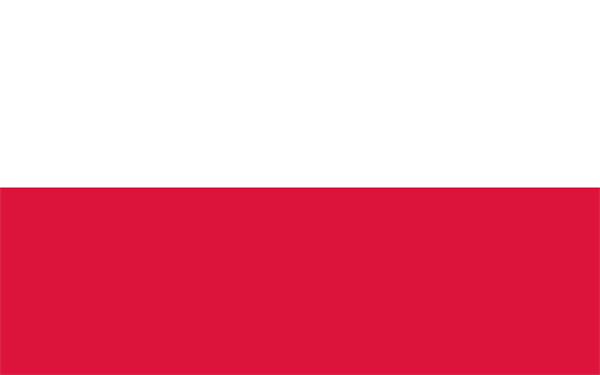
Flag of Poland
Poland's two colours were born from the historical arms with the white eagle.
- Adopted and changed
- 1 August 1919; decision on white and red as national colours 1831
Design
Two equal horizontal stripes, white on top and red below.
What it means
White rests on Poland's white eagle and on the white horseman in the historical joint coat of arms; red rests on the background of these emblems. In heraldic tradition, the white stripe is on top because the colour of the figure lies over the colour of the field.
The story
White and red were used together in the coats of arms of Polish-Lithuanian history. They were adopted as national colours during the 1831 uprising. After Poland regained its independence, the flag's layout was confirmed in 1919. The design is therefore less an invention of new colours than a simplified continuation of old coats of arms.
Sources: gov.pl, eli.gov.pl
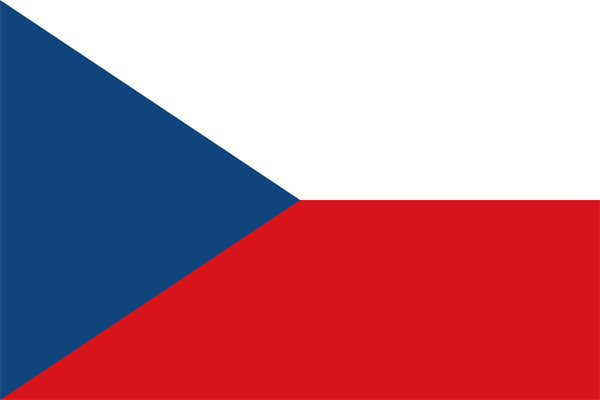
Flag of Czechia
Czechia continued the former Czechoslovak flag in its new state.
- Adopted and changed
- 30 March 1920 in Czechoslovakia; in Czechia since 1993.
Design
White on top and red below, with a blue triangle on the hoist side reaching to the middle of the flag.
What it means
White and red come from the red coat of arms of Bohemia with its white lion. Blue sets the design apart and completes the set of Slavic colours.
The story
At the founding of Czechoslovakia, a white-red layout was used at first. The blue triangle was added because of the resemblance to the Polish flag and the need to express a wider state identity. The 1920 design was kept by Czechia when Czechoslovakia split in 1993. Slovakia, for its part, used its own separate national flag.
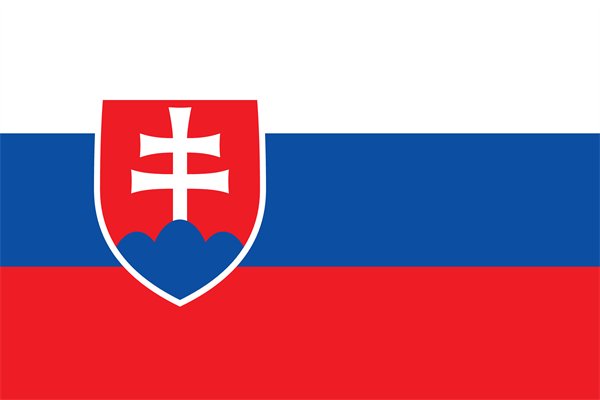
Flag of Slovakia
Slovakia's three colours are set apart by a historical shield with a double cross.
- Adopted and changed
- 3 September 1992; in independent Slovakia since 1993
Design
Horizontal stripes of white, blue and red; near the hoist, a red shield with a white double cross over three blue hills.
What it means
The colours belong to the Slavic tradition. The double cross represents Christianity and the historical state tradition; in the traditional explanation, the three hills represent the Tatra, Fatra and Mátra mountains.
The story
The Slovak national movement used red, white and blue colours in 1848. In the modern independence process these three colours returned. The historical shield was added to the design to distinguish it from similar flags such as Russia's. The flag adopted in 1992 became the national symbol of independent Slovakia after the split of Czechoslovakia.
Sources: prezident.sk, Flags of the World (specialist archive)
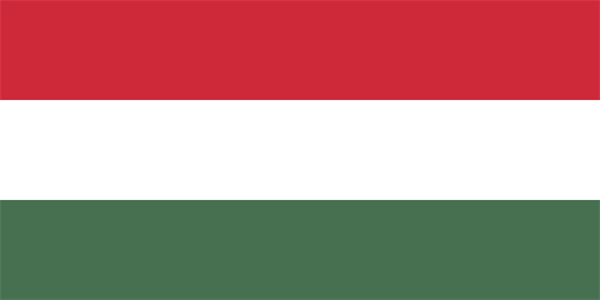
Flag of Hungary
Hungary's three colours link the freedom movements with the colours of the historical coat of arms.
- Adopted and changed
- Tricolour dating from 1848; current design without a coat of arms, 1957
Design
Equal horizontal stripes of red, white and green.
What it means
In the current constitutional description, red represents strength, white represents loyalty and green represents hope. The historical ties of the colours reach back to the Hungarian coat of arms and the national movements.
The story
The tricolour design was an important symbol of the 1848 Revolution. The coat of arms in the centre changed during the periods of the kingdom and of socialist rule. In the 1956 uprising the socialist emblem was cut out, and the flag with a hole in the middle became a powerful memory. From 1957 the official main design became established as the tricolour without a coat of arms.
Sources: parlament.hu, Flags of the World (specialist archive)
Flag of Romania
Romania's three colours developed together with revolutions and the founding of the state.
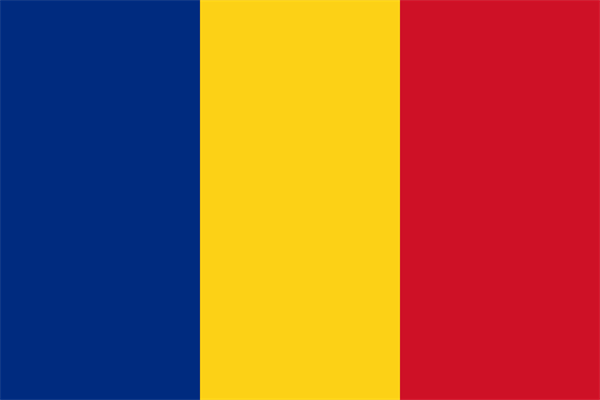
- Adopted and changed
- The current form without the coat of arms dates from 27 December 1989; the tricolour tradition dates from the 19th century.
Design
Three equal vertical stripes of blue, yellow and red, from left to right.
What it means
In the revolutionary tradition of 1848, the three colours were associated with liberty, justice and fraternity. Reducing the history of the colours simply to three modern regions would be misleading.
The story
Blue, yellow and red were used in the 19th-century national movements of Wallachia and Romania. The direction of the stripes changed over time; the vertical layout became established in the 1860s. In the communist period there was a state coat of arms in the centre. During the 1989 Revolution this emblem was cut out, and the tricolour without the arms was then made official.
Sources: Flags of the World (specialist archive), Wikipedia (history and versions)
Flag of Moldova
Moldova's eagle carries the historical Moldovan coat of arms on its breast.
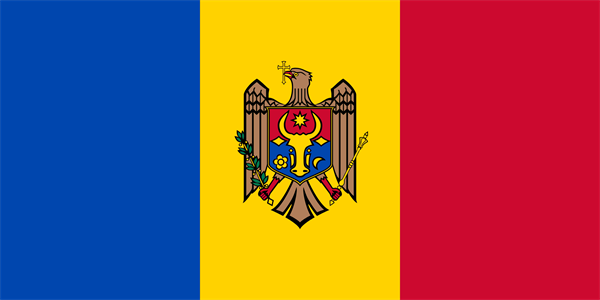
- Adopted and changed
- 27 April 1990
Design
Vertical stripes of blue, yellow and red; the state coat of arms with an eagle on the yellow stripe.
What it means
The three colours are tied to a historical and cultural tradition shared with Romania. The aurochs head on the eagle's breast is an old Moldovan symbol; the olive branch evokes peace, and the sceptre evokes state authority.
The story
Adopted at the end of the Soviet period, the flag returned to the region's old tricolour tradition. The coat of arms in the centre sets the design apart from the Romanian flag and makes Moldova's own state identity visible.
Flag of Bulgaria
Bulgaria's green stripe sets it apart from the Slavic tricolour tradition.
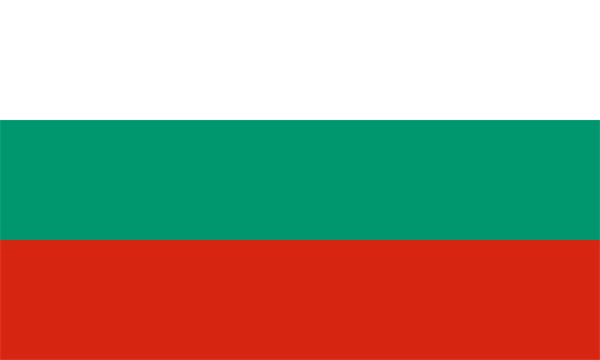
- Adopted and changed
- 1879; return to the three colours without the emblem in 1990
Design
Three equal horizontal stripes, from top to bottom: white, green and red.
What it means
In the common explanation, white represents peace and freedom, green represents nature and agriculture, and red represents courage and sacrifice. The official definition of the colours should be kept separate from these symbolic interpretations.
The story
The first Bulgarian Constitution of 1879 set the white-green-red design. In the socialist period the state coat of arms was added at the upper left of the flag. In 1990 this emblem was removed and the plain tricolour returned. In this way the modern flag was tied back to the basic design of the early period of the independent Bulgarian state.
Flag of Russia
Russia's three colours stretch from an old maritime tradition to the modern state.
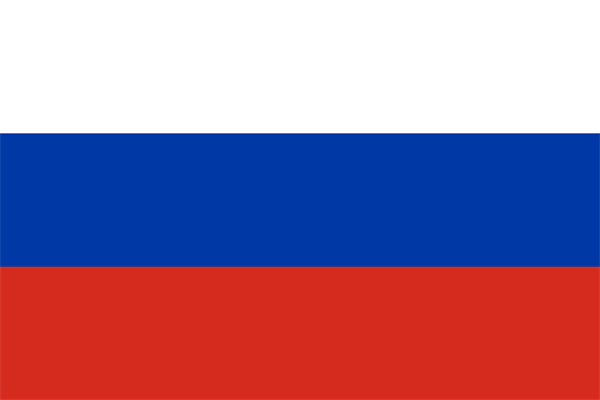
- Adopted and changed
- Reintroduced in 1991; the current ratio and colour definition 1993
Design
Three equal horizontal stripes of white, blue and red, from top to bottom.
What it means
There is no single, binding official list of meanings for the colours. It is common to interpret white as peace and purity, blue as loyalty, and red as courage and strength; these should be presented as interpretations.
The story
The white-blue-red arrangement developed in Russia's maritime flags of the early modern period and became associated especially with the merchant ships of the time of Peter I. In the Soviet period it gave way to the red flag in national use. It reappeared in 1991; in 1993 the current design measurements and colour definition were settled. The flag thus formed a link between the pre-Soviet past and the new state.
Sources: susu.ru, Wikipedia (history and versions)
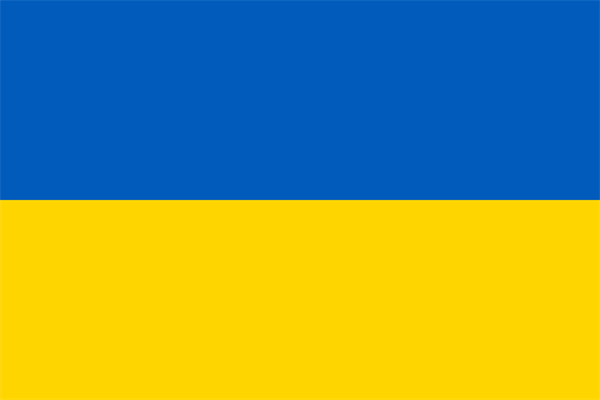
Flag of Ukraine
Blue and yellow are associated with Ukraine's historical colours and its landscape.
- Adopted and changed
- 28 January 1992; the national history of the colours is older than the 19th century.
Design
Two equal horizontal stripes, blue on top and yellow below.
What it means
The most common contemporary interpretation is blue sky and yellow wheat fields. However, the history of the colours also reaches back to historical coats of arms and national movements; the field-and-sky comparison is not the only documented origin.
The story
The blue-and-yellow flag was used in Lviv in 1848 within the national movement. It came to the fore again during the independence periods of the early 20th century and was out of official use in the Soviet period. After independence was regained, parliament adopted the present two-stripe flag in 1992.
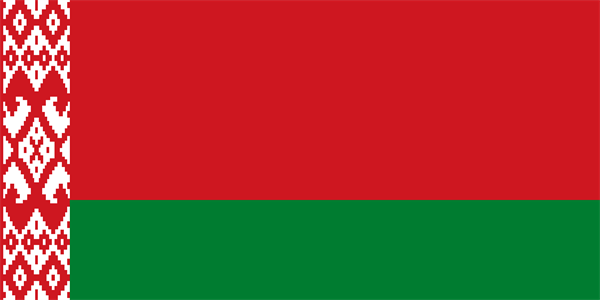
Flag of Belarus
The Belarusian flag combines red and green with a traditional woven pattern.
- Adopted and changed
- 1995; later standard adjustments to the ornament drawing
Design
A wide red stripe at the top and a green stripe below; at the hoist, a traditional red ornament on white.
What it means
In the official account, red represents historical struggles, and green represents nature, hope and rebirth; the woven pattern represents folk culture and labour.
The story
After the 1995 referendum, this design, which developed from the main colours of the Soviet Belarusian flag, was adopted. The Soviet emblems were removed and the woven pattern was kept with a different colour scheme. The flag rests on both the state history of the 20th century and a much older folk weaving tradition.
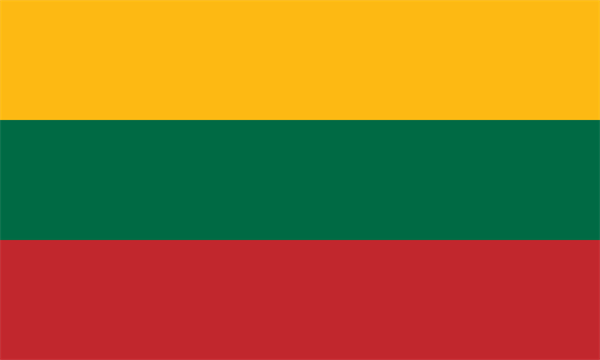
Flag of Lithuania
Lithuania's three colours are a shared symbol of the period of national awakening.
- Adopted and changed
- 1918; returned in 1988–1989 after the Soviet period.
Design
Equal horizontal stripes of yellow, green and red from top to bottom.
What it means
In the common explanation, yellow stands for the sun and prosperity, green for nature and hope, and red for courage and sacrifice for freedom. The addition of the yellow stripe was also initially linked to the idea of making the design brighter.
The story
In the national discussions of 1917, the green and red seen in folk art came to the fore. The commission approved the tricolour design with yellow added in 1918. The flag, abolished in the Soviet period, returned during the process leading to the regaining of independence. The old flag with a mounted knight on a red field is a separate historical state symbol.
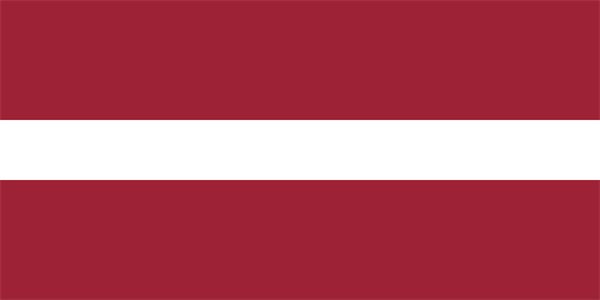
Flag of Latvia
Latvia's dark red and thin white stripe rest on a very old account of a flag.
- Adopted and changed
- Modern design 1917–1918; readopted in 1990
Design
A dark carmine red field with a thinner white horizontal stripe in the centre.
What it means
Red is explained as sacrifice for courage and freedom, and white as freedom and truth. The story told about the colours, of a wounded warrior, is a legend.
The story
A 13th-century Livonian chronicle mentions a red-white-red war banner. The modern national movement took up this historical account again, and the current proportions became established in the early 20th century. After the Soviet period it was readopted in 1990. In the legend, the edges of the cloth wrapped around a wounded warrior turn red while the middle stays white.
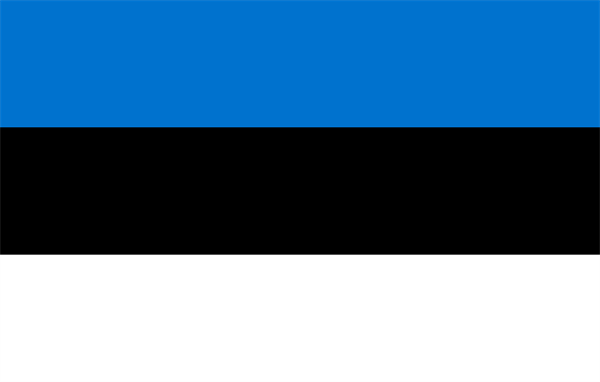
Flag of Estonia
Estonia's blue, black and white grew from a student society's colours into a national symbol.
- Adopted and changed
- Student flag in 1884; national use in 1918; readopted in 1990
Design
Horizontal stripes of blue, black and white, from top to bottom.
What it means
In traditional interpretations, blue stands for the sky, water and loyalty; black for the soil and a difficult past; and white for a bright future, snow and hope. These are not a single fixed list of meanings.
The story
The colours first appeared in the 19th century, in the organisation of Estonian students. The student flag used in ceremonies in 1884 gradually became a sign of the national awakening. It became the national flag of independent Estonia, and during the Soviet period it was out of official use. In 1990 it was adopted again as the state flag.
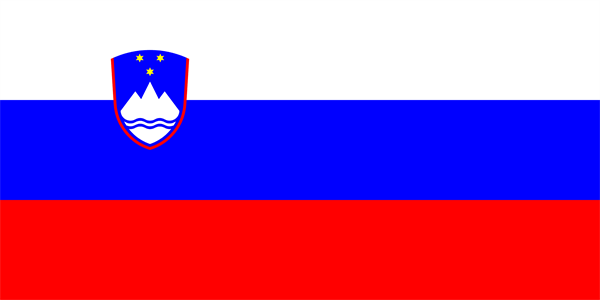
Flag of Slovenia
Slovenia's coat of arms shows Mount Triglav and its waters.
- Adopted and changed
- 25 June 1991; detailed symbols law in 1994
Design
Horizontal stripes of white, blue and red; at the top near the hoist, a blue shield with a mountain, waves and three stars.
What it means
The white mountain represents Triglav, the two wavy lines represent the sea and rivers, and the three golden stars represent the historical coat of arms of the Counts of Celje. The three colours rest on the Slovene national tradition.
The story
The white-blue-red colours were used in the 1848 national movement. The flag that carried a red star in the Yugoslav period was replaced at independence by a new coat of arms prepared by Marko Pogačnik. The design brought together the country's best-known mountain and historical signs.
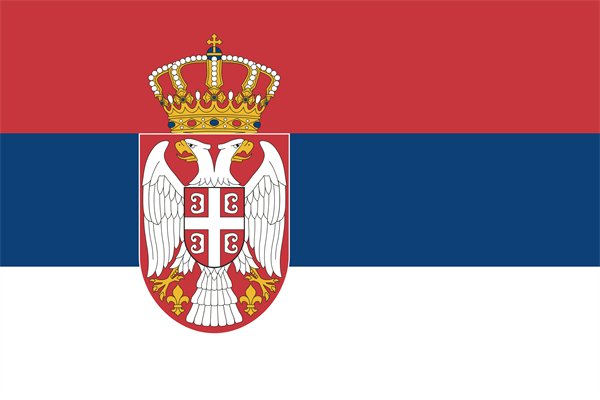
Flag of Serbia
Serbia's three colours are joined with the historical double-headed eagle coat of arms.
- Adopted and changed
- Modern layout in 2004; drawing standard in 2010.
Design
Horizontal stripes of red, blue and white; in the state version, a crowned double-headed eagle near the hoist.
What it means
The colours are part of the Serbian and Slavic national tradition. The eagle, crown and shield express historical state continuity. The presence of a crown does not mean the country is a monarchy today.
The story
The red-blue-white layout was used in the process of Serbian state-building in the 19th century. After the Yugoslav period, the historical coat of arms returned to the modern flag. Serbia, which continued as an independent state in 2006, uses both the state flag with the coat of arms and the national tricolour without it. In 2010 the drawing of the coat of arms was fixed by a standard.
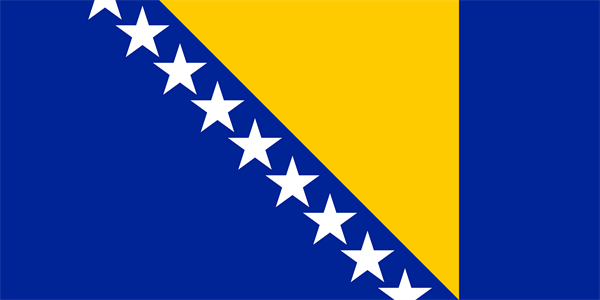
Flag of Bosnia and Herzegovina
Bosnia and Herzegovina's line of stars carries the idea of a Europe that reaches beyond borders.
- Adopted and changed
- 4 February 1998
Design
A blue field; a yellow triangle and a line of white stars parallel to the triangle, with cut-off stars at the ends.
What it means
The triangle evokes the rough shape of the country and its three constituent peoples. The stars stand for Europe, and the line that continues by being cut off stands for continuity. Blue and yellow were chosen in a search for a shared, inclusive identity.
The story
After the war, agreement on a common flag could not be reached. The new design was put into force in 1998 by a decision of the High Representative. The aim was to use symbols that were not based on the historical coat of arms of a single ethnic group.
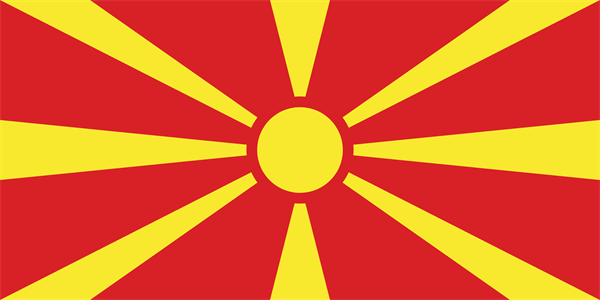
Flag of North Macedonia
The eight-rayed sun is North Macedonia's image of freedom.
- Adopted and changed
- 5 October 1995
Design
A yellow sun on a red field, with eight wide rays extending from the centre to the edges.
What it means
The sun is explained by the idea of the new sun of liberty, which also appears in the national anthem. Red and yellow are historical national colours.
The story
The design with the 16-rayed Vergina Sun, used after independence in 1991, led to a dispute with Greece. In 1995 a new flag with an eight-rayed sun, developed by Miroslav Grčev, was adopted. When the country's name became North Macedonia in 2019, this flag did not change. In this way the older modern design continued alongside the new name.
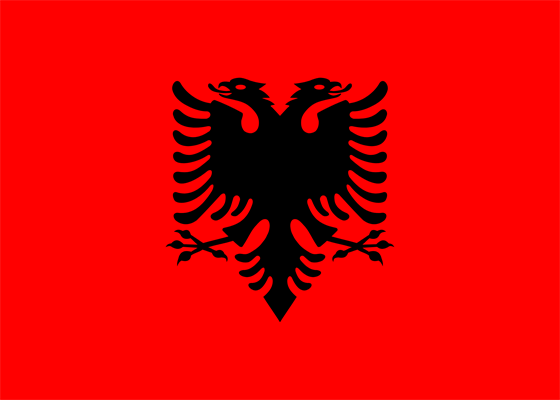
Flag of Albania
Albania's double-headed eagle is linked to the historical legacy of Skanderbeg.
- Adopted and changed
- Tradition of 28 November 1912; current form without a star 1992
Design
A black double-headed eagle on a red field.
What it means
The eagle represents historical dynastic and state identity; in the common interpretation, red represents courage and sacrifice. The double-headed form is also related to older Byzantine and heraldic traditions in the region.
The story
The tradition of Skanderbeg in the 15th century came back to the fore in the 1912 independence movement. Later governments added different marks around the eagle. When the star of the socialist period was removed in 1992, the plain red-and-black arrangement returned.
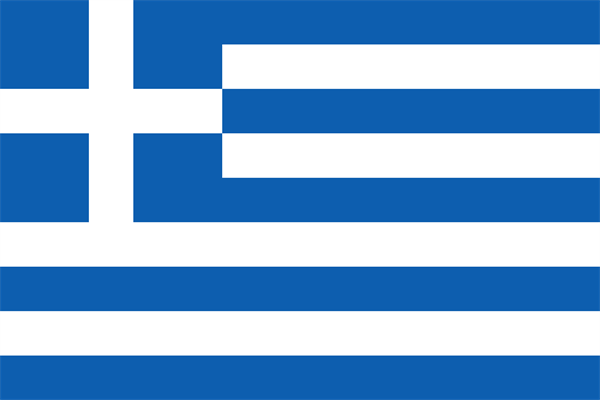
Flag of Greece
Greece's nine stripes are linked with the tradition of independence.
- Adopted and changed
- Striped design 1822; as the sole national flag in 1978
Design
Nine horizontal blue and white stripes; a white cross in a blue square at the upper left.
What it means
The cross represents the Greek Orthodox Christian tradition. In the common explanation, the nine stripes are linked to the nine syllables of the Greek phrase “Freedom or death.” Interpreting blue and white as the sea, the sky and the waves is also common.
The story
After the struggle for independence in 1821, different land and sea flags were arranged. The striped design was first used at sea; a blue flag with a plain white cross held an important place on land. In 1978 the striped version was set as the sole official national flag.
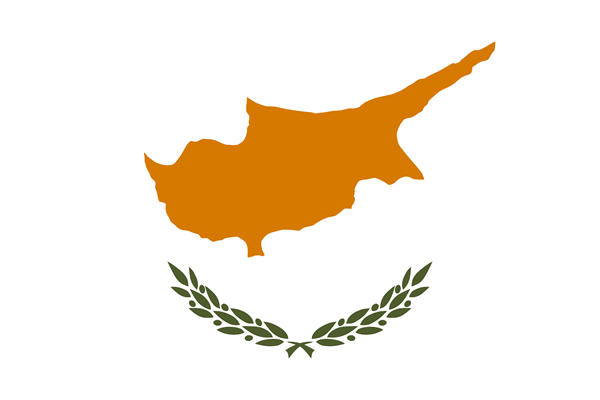
Flag of the Republic of Cyprus
The copper-coloured island and olive branches carry a message of peace.
- Adopted and changed
- 16 August 1960; the drawing and proportions were standardised in 2006.
Design
A copper-coloured map of Cyprus on a white field, with two crossed green olive branches beneath it.
What it means
The colour of the map refers to the island's historical link with copper; the white field and the olive branches express peace. The design is connected to the search for a shared symbol between the Turkish and Greek communities on the island.
The story
In the competition held for the independent Republic of Cyprus, the design of the Turkish Cypriot artist İsmet Güney was chosen. Using the map and the peace branches was an effort to build a shared identity without putting forward the religious or national symbol of a single community. In 2006 the details of colour and drawing were standardised.