
Flag of Colombia
Colombia's wide yellow stripe sets apart its tricolour independence heritage.
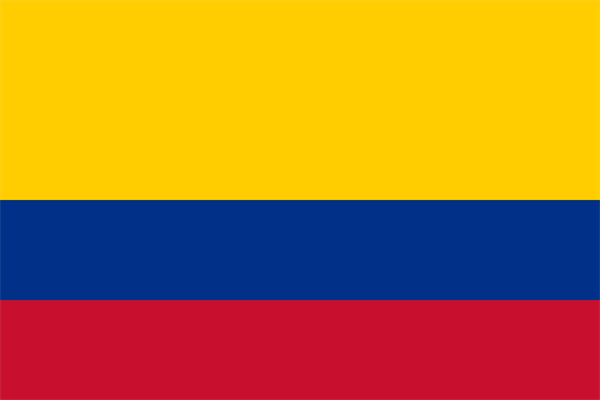
- Adopted and changed
- The present horizontal layout dates from 1861.
Design
Yellow covering the upper half, with narrower blue and red stripes below.
What it means
In the common national explanation, yellow represents natural wealth and the sun, blue represents the seas and waters, and red represents the struggle for independence.
The story
The yellow-blue-red tradition of the flag is connected with Francisco de Miranda's South American independence movement. The shared colours of the Gran Colombia period lived on in different designs in Colombia, Venezuela and Ecuador after the state split. The present horizontal layout of Colombia, in which the yellow stripe covers half the area, became established in 1861.
Sources: colombia.co, Flags of the World (specialist archive)
Flag of Venezuela
Venezuela's eighth star symbolises a return to an old independence-era decree.
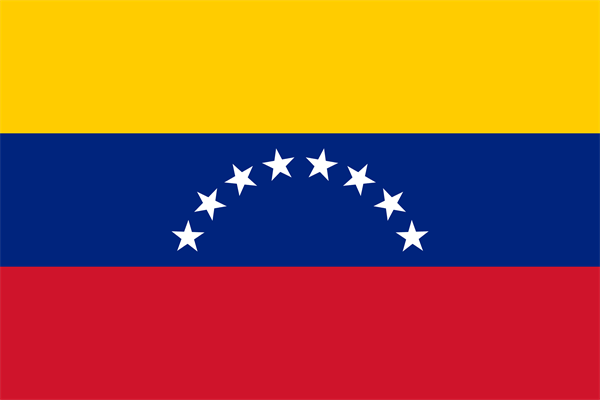
- Adopted and changed
- Tricolour roots 1806; current eight-star version March 2006
Design
Equal horizontal stripes of yellow, blue and red; eight white stars forming an arc on the blue. The state version carries the coat of arms.
What it means
Yellow is associated with the country's wealth, blue with the sea, and red with the struggle for independence. Seven stars represent the historical provinces that declared independence, and the eighth represents Guayana.
The story
Francisco de Miranda's tricolour tradition is the common root of the flags of Venezuela, Colombia and Ecuador. When the number of stars was raised from seven to eight in 2006, reference was made to Simón Bolívar's 1817 decree on the Guayana star.
Flag of Peru
Peru's two red stripes are a visual legacy of the independence period.
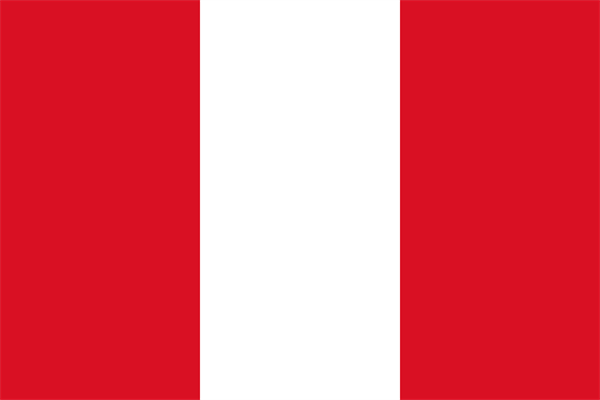
- Adopted and changed
- Red-white-red vertical design, 1825
Design
Vertical stripes of red, white and red; the state version has the coat of arms in the centre.
What it means
In the common explanation, red stands for the sacrifice made in the struggle for independence, and white for peace. In the version with the coat of arms, the vicuña, the cinchona tree and the cornucopia represent the country's animal, plant and mineral wealth.
The story
The search for a national flag, which began in the time of José de San Martín, produced several different designs. The present vertical three-stripe design became established in 1825. The account that the colours were inspired by flamingos is well known, but it should not be used as established history. The plain flag and the version carrying the state coat of arms have separate areas of use.
Flag of Chile
The single-star Chilean flag has kept its basic form since the independence period.
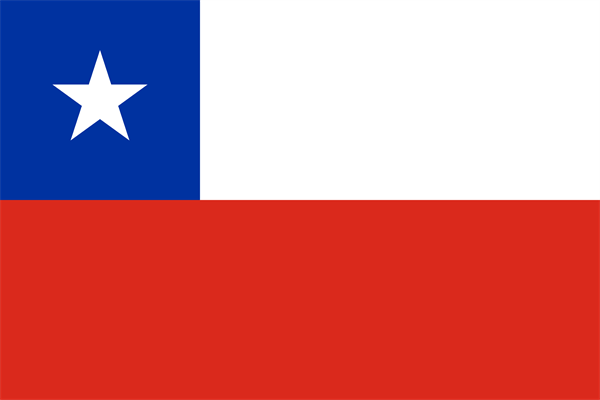
- Adopted and changed
- 18 October 1817.
Design
The lower half is red; above it is a white area with a blue square at the hoist corner containing a white star.
What it means
In the common interpretation, white stands for the snow of the Andes, blue for the sky and ocean, red for sacrifice for independence, and the star for the guiding ideals of the nation.
The story
Several different tricolour flags were used during Chile's independence process. In 1817 the single-star design was adopted, creating a more distinctive symbol. Later regulations specified the measurements and the star in more detail, but the basic appearance did not change. For this reason, the history of the design connects directly with the first years of independence.
Flag of Argentina
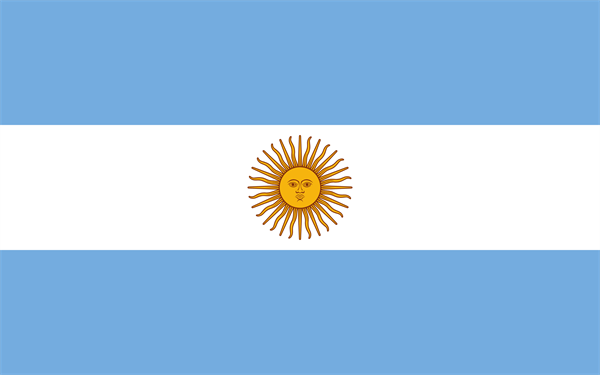
The Sun of May at the centre of light blue and white recalls the period of independence.
- Adopted and changed
- First flag 27 February 1812; the sun was added in 1818
Design
Horizontal stripes of light blue, white and light blue; in the centre, a golden sun with a face.
What it means
The sun is recognised as a symbol of the May Revolution and the period of independence. There are different historical explanations for the origin of the blue and white; the sky-and-cloud interpretation is popular but is not the only proven beginning.
The story
Manuel Belgrano raised a flag in Rosario in 1812. The design settled during the independence process; the sun was added in 1818. The areas of use of the versions with and without the sun changed over time. In today's national design, the sun forms a clear focal point on the plain background of light blue and white.
Flag of Uruguay
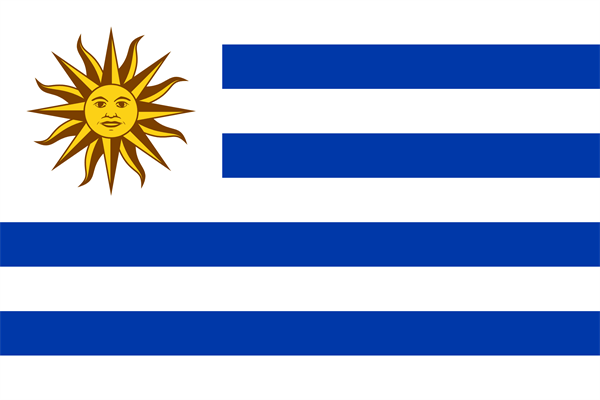
Uruguay's nine stripes recall the country's first administrative divisions.
- Adopted and changed
- 11 July 1830; first version in 1828
Design
Nine horizontal white and blue stripes; a golden sun with a face in the upper-left white canton.
What it means
The nine stripes represent the first nine departments. The Sun of May is tied to the independence tradition in the Río de la Plata region; the blue-white colours also reflect this historical setting.
The story
The first flag, adopted in 1828, had nine blue and ten white stripes. In 1830 the total number of stripes was reduced to nine. In this way the memory of the first nine departments was kept, and the design became easier to make out from a distance.
Flag of Brazil
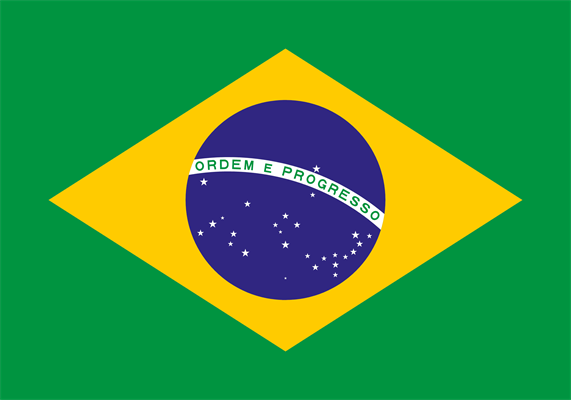
Brazil's flag carries the sky under which the republic was born.
- Adopted and changed
- 19 November 1889; 27-star arrangement 1992
Design
A green field, a yellow rhombus, a blue globe with stars, and a white band bearing the words Ordem e Progresso.
What it means
The historical origin of green and yellow is the dynastic colours of the imperial period. The explanation of forests and wealth is an interpretation that became popular later. The 27 stars represent the 26 states and the Federal District; the inscription means "Order and Progress".
The story
When the monarchy ended in 1889, the green and yellow of the old flag were kept, and a starry celestial globe replaced the imperial coat of arms. The arrangement of the stars is based on the sky over Rio de Janeiro on 15 November 1889, the day the republic was proclaimed; it is depicted as if seen from outside the sphere. The number of stars changed with new states.
Sources: gov.br, pge.mt.gov.br, Flags of the World (specialist archive)