
Flag of China
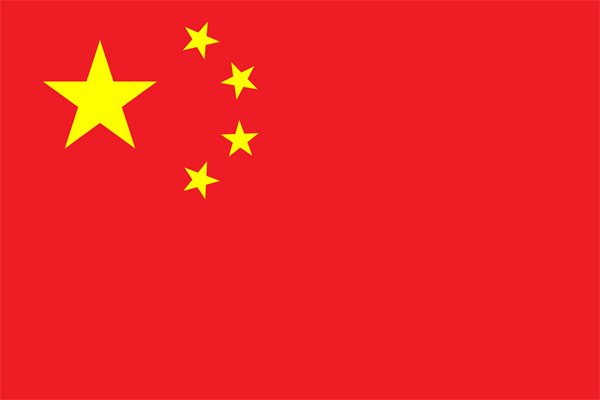
The red flag with five stars expresses the idea of political unity.
- Adopted and changed
- Adopted on 27 September 1949; raised on 1 October 1949
Design
A red field; in the upper left, one large yellow star and four smaller yellow stars turned towards it.
What it means
In the official explanation, red represents revolution, the large star represents the Communist Party of China, and the four small stars represent the Chinese people. The small stars turning towards the large star express unity under the leadership of the party.
The story
In the call for designs issued when the new People's Republic of China was being founded, Zeng Liansong's proposal was taken as the basis. The design was adopted in 1949 and raised at the proclamation of the state. The four small stars were also historically given meaning through social classes; here the more general "people" explanation of the current official account is used.
Flag of Taiwan
Separate administration and flag record
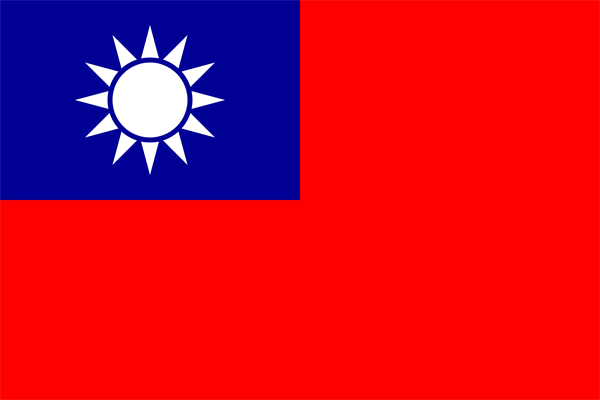
The flag with the white sun is the symbol of Republic of China history that continues in Taiwan.
This entry describes the flag of the Republic of China as used in Taiwan; the classification is not a judgement on diplomatic recognition.
- Type
- Separate administration and flag record
- Adopted and changed
- 5 May 1921 under the Guangzhou government; nationwide in 1928; in Taiwan from 1945
Design
A red field; at the upper left, a blue rectangle containing a white sun with 12 rays.
What it means
The 12 rays of the white sun are explained as uninterrupted progress, through the traditional two-hour divisions of the day. Blue, white and red are linked with the Three Principles of the People, and also with values such as liberty, equality and fraternity.
The story
Lu Haodong's blue emblem with a white sun developed within the revolutionary movement in 1895. The design, with the red field added, was adopted by the Guangzhou government in 1921 and nationwide in 1928. It has been used in Taiwan since 1945, and it continued after the Republic of China government moved to the island in 1949.
Sources: english.president.gov.tw, Wikipedia (history and versions), Flags of the World (specialist archive)
Flag of Hong Kong
Special administrative region
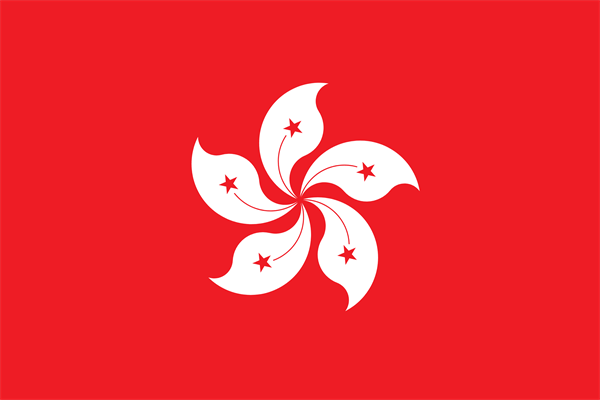
Hong Kong's white bauhinia flower is a sign of regional identity.
China's Hong Kong Special Administrative Region.
- Type
- Special administrative region
- Adopted and changed
- Design adopted in 1990; official use from 1 July 1997
Design
A white five-petalled bauhinia flower on a red field; each petal has a small red star.
What it means
The bauhinia represents Hong Kong, and the red and the stars represent the tie with China. The red-white contrast in the design is also explained through the idea of "one country, two systems".
The story
To replace the blue flag of the period of British rule, a special region flag to be used after the handover to China was prepared. The design was adopted in 1990; it was officially raised in 1997 when the Hong Kong Special Administrative Region was established. The Basic Law provides for the regional flag to be used alongside China's national flag.
Sources: basiclaw.gov.hk, protocol.gov.hk, Flags of the World (specialist archive)
Flag of Mongolia
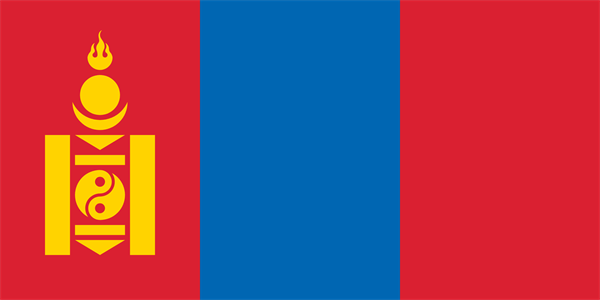
The Soyombo brings together Mongolia's symbols of independence and culture.
- Adopted and changed
- Current form without a star, 1992
Design
Vertical stripes of red, blue and red; a golden Soyombo symbol on the red stripe on the hoist side.
What it means
In the constitutional description, blue represents the eternal sky and red represents progress and prosperity. The Soyombo, with fire, sun, moon and geometric shapes, carries ideas such as the continuity of life, independence and unity.
The story
The red-blue-red design was also used in the socialist period; at that time there was an extra star above the Soyombo. This star was removed in the period of the democratic constitution adopted in 1992. In this way the flag kept its recognised colours while showing the transition to a different political period through a small but important change.
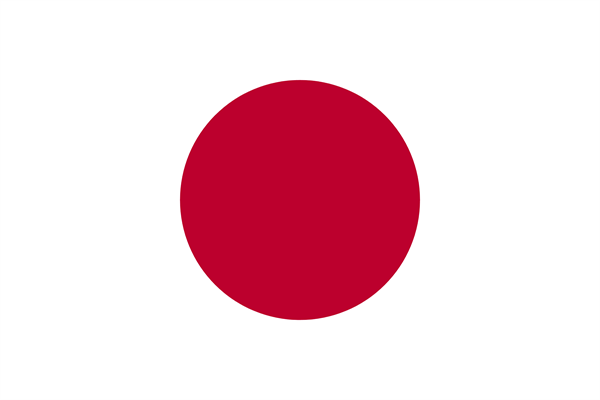
Flag of Japan
The Hinomaru expresses the sun with a single red circle.
- Adopted and changed
- Long historical use; national flag law 1999
Design
A red sun disc centred on a white field.
What it means
The red circle represents the sun. The name Hinomaru means "sun disc". Meanings such as purity and sincerity can be attached to white and red; these should not be given as a legal explanation as definite as the sun symbol.
The story
Sun signs were used in Japan long before the modern state. In the 19th century the sun disc on a white field was made official for identifying ships; over time it became the country's general symbol. After being regarded as the national flag by tradition for a long time, it was clearly defined by law in 1999.
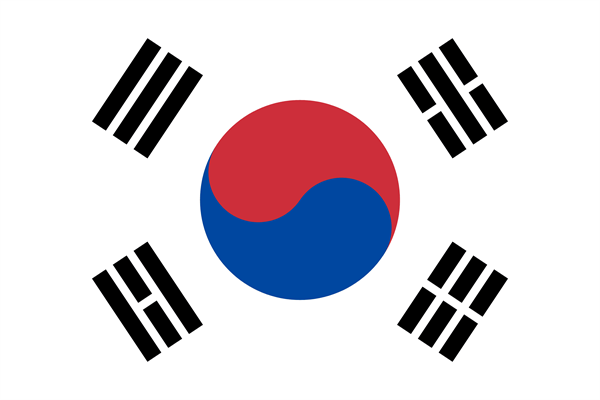
Flag of South Korea
The Taegeukgi combines the idea of balance and harmony with heaven, earth, water and fire.
- Adopted and changed
- Historical predecessor 1883; South Korean standard 1949
Design
A white field with a red and blue taegeuk in the centre; in the corners, four black marks of three lines each.
What it means
White is associated with peace and purity. The red and blue centre expresses the balance of opposing forces that complete one another. The four trigrams represent heaven, earth, water and fire. The opposition does not mean "good versus evil".
The story
As its foreign relations widened in the 19th century, Korea needed a national flag. The design with the taegeuk developed in this period and was made official in 1883. The layout used in South Korea today is based on the form standardised in 1949. Ancient cosmological symbols were thus carried onto the flag of a modern state.
Sources: Flags of the World (specialist archive), mois.go.kr
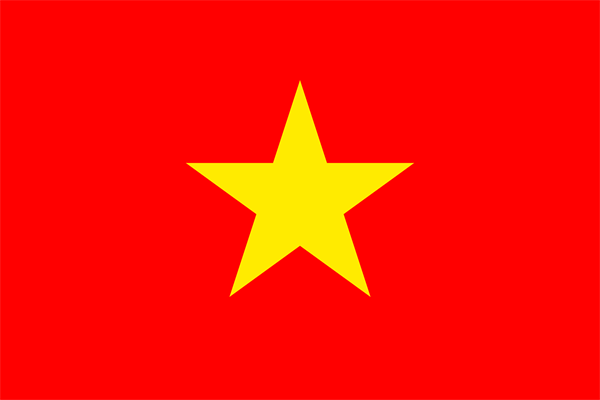
Flag of Vietnam
The golden star on a red field carries the idea of revolution and a shared nation.
- Adopted and changed
- In use in 1945; star shape 1955; for unified Vietnam in 1976
Design
A large yellow five-pointed star on a red field.
What it means
Red is associated with revolution and the struggle for independence. In the common historical interpretation, the five points of the star bring together workers, peasants, intellectuals, young people and soldiers.
The story
The red flag with the star came to the fore in the independence movement of the 1940s and was adopted by the Democratic Republic of Vietnam, founded in 1945. In 1955 the drawing of the star was reworked. When the north and south of the country were united under one state in 1976, the same flag became the national symbol of all Vietnam.
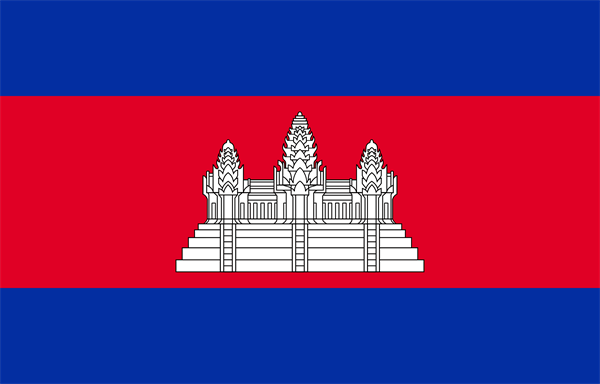
Flag of Cambodia
Cambodia's flag places Angkor Wat at the centre of the country's historical continuity.
- Adopted and changed
- 1948; readopted in 1993
Design
Horizontal stripes of blue, red and blue; a white depiction of Angkor Wat on the wide red stripe.
What it means
In the common explanation, blue represents the monarchy, red the nation, and the white temple the religious and cultural heritage. Angkor Wat makes visible the link with Khmer civilisation.
The story
The 1948 design was replaced by different flags during the country's later changes of government. It was brought back when the monarchy was restored in 1993. The return of the temple to the flag emphasised the modern state's link with the ancient Khmer heritage.
Flag of Thailand
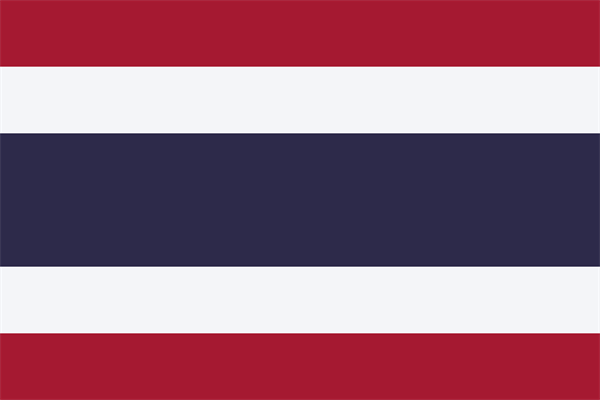
The symmetrical tricolour of Thailand is explained through nation, religion and monarchy.
- Adopted and changed
- 28 September 1917.
Design
Horizontal stripes of red, white, wide blue, white and red.
What it means
In the common national interpretation, red represents the nation, white represents religion and blue represents the monarchy. The blue stripe in the middle is twice as wide as the others.
The story
Earlier flags of Siam had a white elephant on a red field. In 1917 the present tricolour layout was adopted. The addition of the blue stripe is explained through the closeness of its colour both to royal tradition and to the colours of the First World War allies. Unlike the earlier design with a figure, the new form looks the same even when turned upside down.
Flag of Myanmar
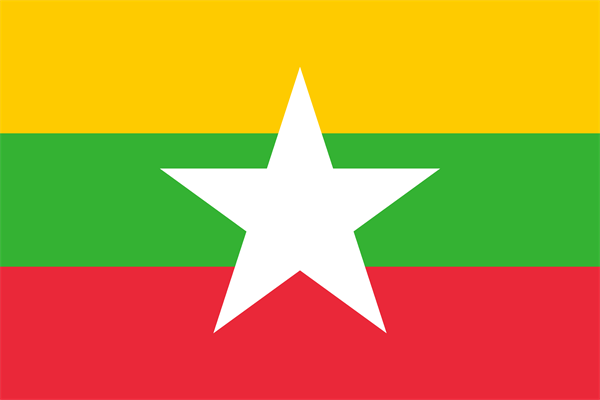
Myanmar's large white star spreads across the whole of the three-coloured field.
- Adopted and changed
- 21 October 2010
Design
Horizontal stripes of yellow, green and red; a large white five-pointed star in the centre.
What it means
Yellow is explained as solidarity, green as peace and tranquillity, and red as courage and determination. The white star represents unity.
The story
The 2008 Constitution defined the new flag; the design was hoisted in 2010. A single large star replaced the cogwheel, rice ears and small stars of the previous flag.
Flag of Malaysia
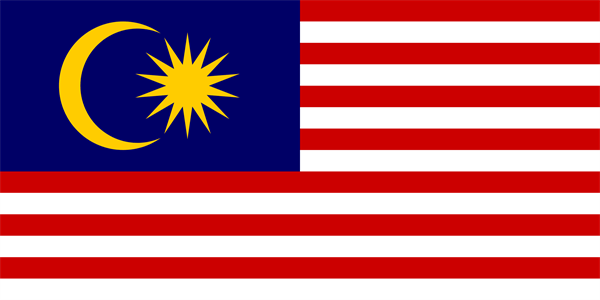
The Jalur Gemilang joins the members of the federation through stripes and a star.
- Adopted and changed
- Malayan predecessor 1950; 14-stripe Malaysian design 1963
Design
14 horizontal red and white stripes; in the blue canton, a yellow crescent and a 14-pointed star.
What it means
In the official explanation, the 14 stripes represent the 13 states and the federal government. The star represents federal unity; the crescent represents Islam, yellow the royal tradition, and blue unity. Red is associated with courage and white with purity.
The story
The origin of the flag goes back to a design prepared for the Federation of Malaya and used in 1950. When Malaysia was formed in 1963, the stripes and the points of the star were increased to 14. Although Singapore later left, the number was kept and began to be explained through the current federal structure. For this reason, reading the flag only through the number of states is incomplete.
Sources: malaysia.gov.my, Flags of the World (specialist archive)
Flag of Singapore
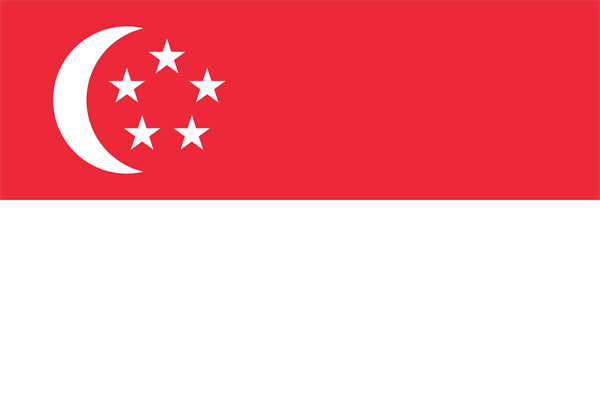
Singapore's crescent stands for a young country, and its five stars for shared ideals.
- Adopted and changed
- 3 December 1959; as the flag of the independent state in 1965.
Design
Red on top and white below, with a white crescent and five stars arranged in a circle at the upper left.
What it means
Red stands for the brotherhood and equality of humanity, and white for purity and virtue. The crescent represents a rising young nation; the stars represent democracy, peace, progress, justice and equality.
The story
When Singapore gained internal self-government, a committee chaired by Toh Chin Chye prepared the new flag. The design, introduced in 1959, was kept after full independence in 1965. In this way the symbol of the self-rule period became the flag of the independent city-state.
Sources: nlb.gov.sg, Flags of the World (specialist archive)
Flag of Brunei
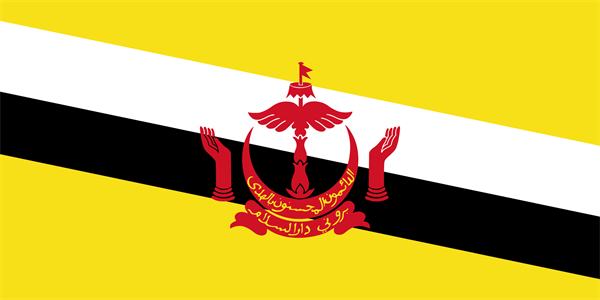
On Brunei's flag, yellow stands for the sultanate, and the diagonal stripes recall the historical order of government.
- Adopted and changed
- 29 September 1959; the striped base dates from 1906
Design
Yellow field; diagonal white and black stripes; the red state coat of arms in the centre.
What it means
Yellow is associated with the sultan, and white and black with historical senior officials. The crescent in the coat of arms represents Islam, and the upturned hands represent protective rule.
The story
In 1906, white and black stripes had been added to the yellow field. During the constitutional change of 1959, the state coat of arms was also placed on the flag. At independence in 1984 the design was kept, stressing the continuity of the state tradition.
Flag of Indonesia
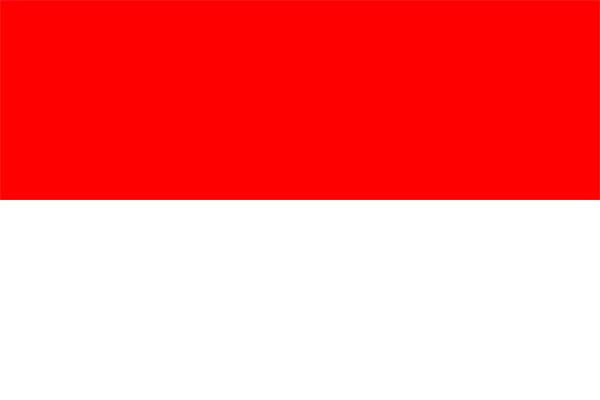
Red and white keep the memory of independence alive in a plain flag.
- Adopted and changed
- 17 August 1945
Design
Two equal horizontal stripes, red on top and white below.
What it means
In Indonesia, red and white are linked to old cultural and political traditions. In one traditional interpretation, red expresses the material side of a person and white the spiritual side; together they form a whole.
The story
The history of the red and white colours is linked to the Majapahit period; the modern independence movement reclaimed them. When independence was proclaimed on 17 August 1945, the flag sewn by Fatmawati was raised. This historic example, preserved under the name Bendera Pusaka, was used in ceremonies in the following years and was eventually replaced by a copy so that it could be protected.
Flag of the Philippines
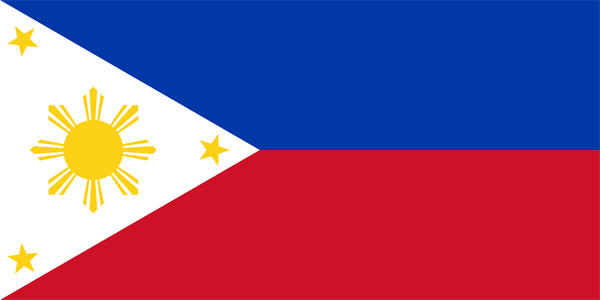
The Philippine flag shows the islands, the struggle for independence and a dawning era.
- Adopted and changed
- 1898; current colour standard 1998
Design
Blue and red horizontal stripes; at the hoist, a white triangle containing a sun with eight rays and three stars.
What it means
In the current explanation, the three stars represent Luzon, the Visayas and Mindanao; the eight main rays of the sun represent the eight provinces associated with the uprising against Spain. White is explained as peace and purity, blue as high ideals, and red as courage.
The story
Emilio Aguinaldo's design was sewn in Hong Kong by Marcela Agoncillo, Lorenza Agoncillo and Delfina Herbosa Natividad. It became the emblem of the 1898 struggle for independence. The sun expresses the dawn of a new era of freedom; the later history of the flag developed together with colonial administrations, bans and independence.