
Flag of Türkiye
The red flag with the crescent and star is a symbol of Türkiye's independence and shared identity.
- Adopted and changed
- A design inherited from the Ottoman period; its measurements were standardised by law in 1936
Design
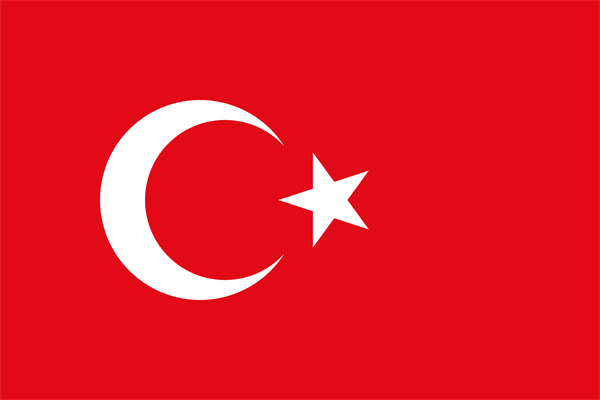
A white crescent and a five-pointed star on a red field.
What it means
The crescent and star have a long history in Turkish and Ottoman symbolic tradition. Today the flag is associated with independence, homeland and social unity. The link between red and sacrifice is a strong national interpretation; it would not be correct to trace the origin of all the elements back to a single battle.
The story
On Ottoman banners the moon, the star and other signs were used in different forms. The number of points on the star and its relation to the crescent changed over time. The Republic continued the red flag with the crescent and star; the 1936 law and the 1937 regulation were important stages in standardising its measurements. The story of the flag is less a one-night invention than the continuation of a symbol that developed over centuries.
Sources: TDV İslâm Ansiklopedisi, DergiPark (academic article)
Flag of Azerbaijan
Blue, red and green bring together Turkic identity, modernisation and Islamic culture.
- Adopted and changed
- 9 November 1918; readopted on 5 February 1991.
Design
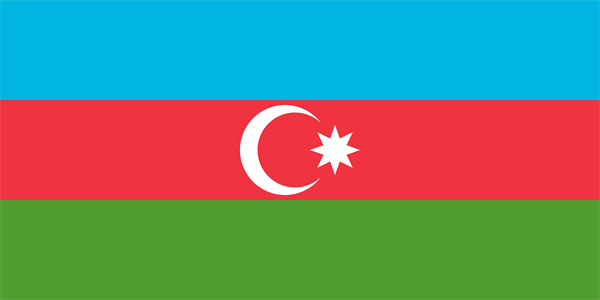
Horizontal stripes of blue, red and green, with a white crescent and eight-pointed star on the red stripe.
What it means
In the official description, blue represents Turkic origin, red represents modernisation and democracy, and green represents Islamic civilisation. The crescent and the eight-pointed star are the flag's main national emblems.
The story
The flag was adopted in 1918 by the Azerbaijan Democratic Republic. In the Soviet period it gave way to other flags in national use. After being readopted in Nakhchivan in 1990, it returned as Azerbaijan's state flag in 1991. In this way the symbol of the short-lived first republic also became a sign of renewed independence.
Sources: president.az, president.az
Flag of Georgia
Georgia's five-cross flag turns medieval imagery into a symbol of the modern state.
- Adopted and changed
- 14 January 2004
Design
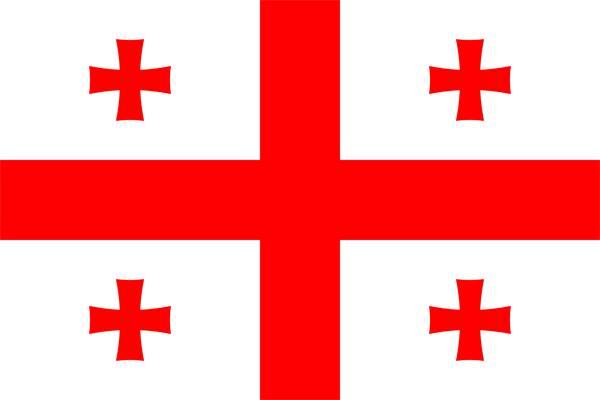
A large red cross on a white field; four small red crosses in the four corners.
What it means
The crosses reflect the country's Christian history. In the common religious interpretation, the central cross represents Jesus and the other four represent the Evangelists; this interpretation is not the only explanation of the origin.
The story
Historical examples of the five-cross arrangement appear on medieval maps. The design, used by political movements in recent times, became the national flag in 2004 after the Rose Revolution. In this way, an old symbol became the mark of a new political era.
Flag of Armenia
The orange of Armenia's flag represents labour and creativity.
- Adopted and changed
- 24 August 1990; tradition of the first republic dates from 1918
Design
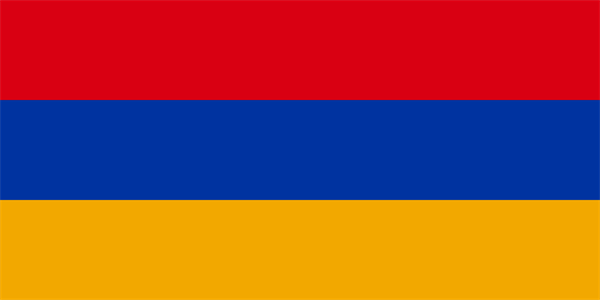
Three equal horizontal stripes of red, blue and orange.
What it means
In the official description, red stands for the Armenian Highland, the struggle to survive, the Christian faith and freedom; blue for the wish to live in peace; and orange for creativity and hard work.
The story
The three colours go back to the first republic of 1918. After the Soviet period, the flag was readopted in 1990, restoring the link with the historical republic. A 2006 law reorganised the design and its symbolic description.
Sources: president.am, Flags of the World (specialist archive)
Flag of Iran
The Iranian flag combines the old tricolour layout with symbols from after 1979.
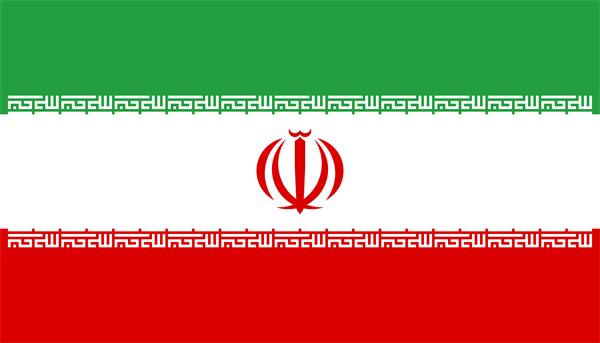
- Adopted and changed
- The present emblem and inscription layout date from 1980.
Design
Horizontal stripes of green, white and red, with a red emblem in the centre and white writing repeated along the stripe borders.
What it means
Green is interpreted as Islam and vitality, white as peace, and red as courage and sacrifice. The stylised emblem in the centre is related to the word Allah and to Islamic belief. The takbir is repeated 22 times in total.
The story
The green-white-red tricolour had been in use since the constitutional period of the early 20th century. After the 1979 Revolution, the old emblem with the lion and sun was removed. In 1980 the new layout with the present red emblem and inscriptions was adopted. The 22 repetitions refer to 22 Bahman in the Iranian calendar, the day remembered as the date of the revolution's victory.
Flag of Iraq
Iraq's flag carries the green takbir inscription on the Arab colours.
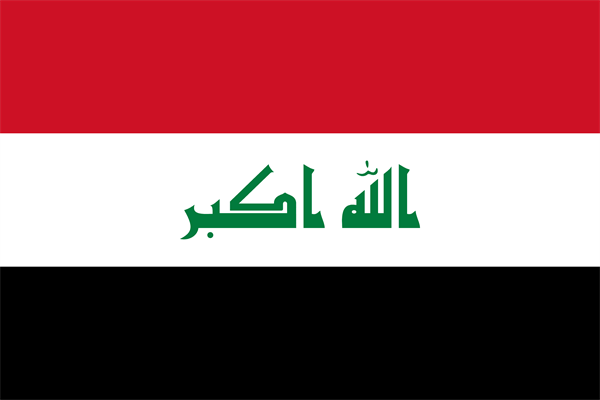
- Adopted and changed
- Current design without stars, 2008
Design
Equal horizontal stripes of red, white and black, with green Kufic script on the white stripe.
What it means
The colours belong to the Arab political and historical flag tradition. The phrase in the centre, Allahu akbar, means “God is the greatest.”
The story
Changes of government in the 20th century altered the Iraqi flag several times. The takbir inscription was added in 1991 to the three-star design that dated from 1963, and the form of the script was changed later. In 2008 the three stars were removed and the green Kufic script was kept. In this way the signs of the earlier political unity project were removed while the main colour scheme was preserved.
Flag of Syria
Syria's current flag returns to the three-star design of the independence period.
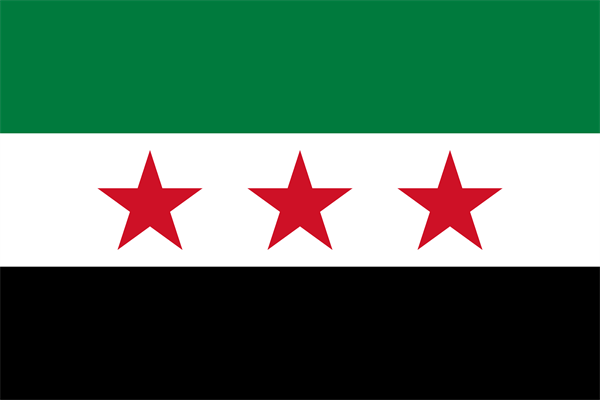
- Adopted and changed
- Put back into use in December 2024; Constitutional Declaration of 13 March 2025, Article 6
Design
Equal horizontal stripes of green, white and black; three red five-pointed stars on the white stripe.
What it means
The colours are linked to the Pan-Arab tradition of symbols. Historical explanations of the three stars have been tied to narratives of administrative and regional unity in different periods of the design; there is no single fixed explanation.
The story
This arrangement goes back to the Syrian flag of the 1930s and the independence period. Different designs were used under later governments. The three-star flag adopted by the opposition after 2011 returned when Assad rule ended in December 2024; the March 2025 declaration defined its form.
Versions and context
- Syria — arrangement under the 2025 Constitutional Declaration: Green, white and black stripes and three red stars; it began to be used again in December 2024.
Sources: ConstitutionNet (constitutional documents archive), Flags of the World (specialist archive)
Flag of Lebanon
Lebanon's cedar is a symbol of its mountains and of a long-lived historical identity.
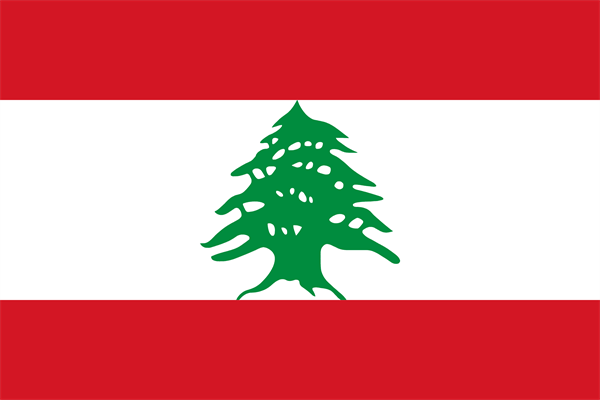
- Adopted and changed
- 7 December 1943; the design of the independence period dates from November 1943
Design
Horizontal stripes of red, white and red; an entirely green cedar tree on the wide white stripe.
What it means
Red is associated with the sacrifices made for independence, and white with the snow on the mountains and with purity. The cedar represents resilience and the country's historical heritage.
The story
The cedar had already appeared on the flag of the French Mandate period. During the 1943 independence process, the vertical tricolour arrangement was dropped and the red-and-white horizontal design was adopted. In this way an old local symbol was carried into the new national framework.
Flag of Israel
The blue-and-white flag builds on the Jewish prayer shawl and the Star of David tradition.
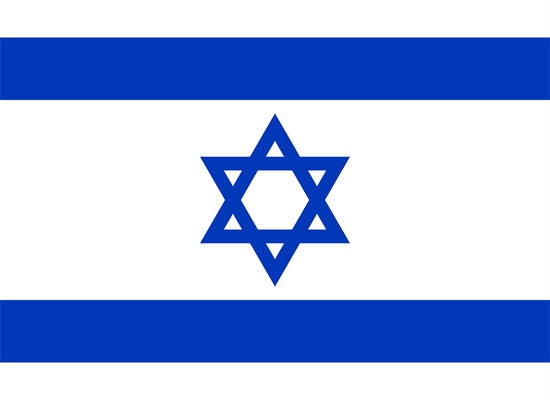
- Adopted and changed
- 28 October 1948.
Design
Two horizontal blue stripes on a white field, with a blue six-pointed Star of David in the centre.
What it means
The stripes recall the Jewish prayer shawl called the tallit. The Star of David is one of the historical symbols of Jewish identity. The blue-and-white layout carries this religious and cultural background into a national symbol.
The story
The design was used within the Zionist movement in the late 19th century. In accounts around the 1897 Basel Congress, the prayer shawl as the model for the flag is especially emphasised. After the founding of Israel it was adopted as the state flag in 1948. In this way a symbol that had earlier represented a movement became the official flag of the new state.
Sources: Flags of the World (specialist archive), Flags of the World (specialist archive)
Flag of Palestine
The Palestinian flag brings the Pan-Arab colours together in one symbol of national identity.
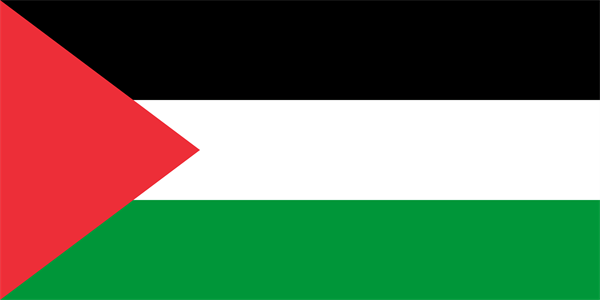
- Adopted and changed
- Flag of the Palestinian national movement since 1964; legal regulation in 2006
Design
Horizontal stripes of black, white and green, with a red triangle at the hoist.
What it means
The colours are linked to the Arab Revolt and the wider Pan-Arab tradition of symbols. In historical accounts, black is associated with the Abbasids, white with the Umayyads, green with the Fatimids, and red with the Hashemite and revolt tradition.
The story
The roots of the design go back to Arab flags of the early 20th century. In the era of the Palestine Liberation Organization it became established as a shared national symbol, and it was also used at the 1988 declaration of statehood. A 2006 law regulated the flag's form and use.
Flag of Jordan
Jordan's seven-pointed star sets it apart from similar Pan-Arab flags.
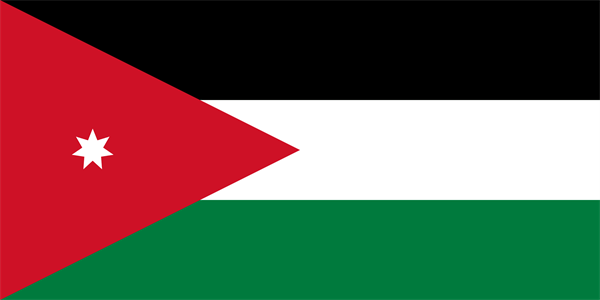
- Adopted and changed
- 16 April 1928
Design
Horizontal stripes of black, white and green; a white seven-pointed star on a red triangle.
What it means
In the historical explanation, the colours are associated with the Abbasid, Umayyad, Fatimid and Hashemite traditions. The star is explained through the seven verses of the Fatiha and the idea of unity.
The story
The flag belongs to the family of the banner of the 1916 Arab Revolt. It took its present arrangement under Hashemite rule. The seven-pointed star in the red triangle adds a mark specific to Jordan to the shared Arab colours.
Flag of Saudi Arabia
The green flag carries a statement of faith and a sword together.
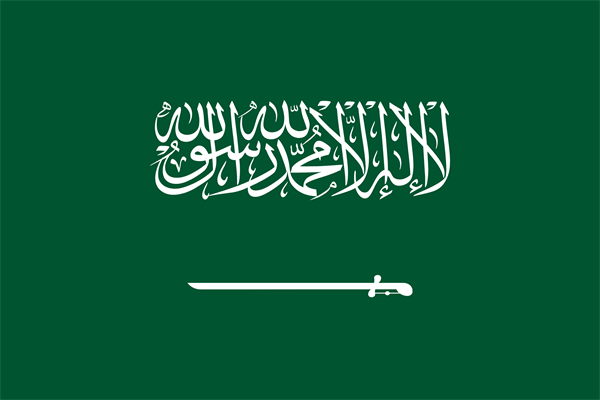
- Adopted and changed
- The basic date of the current flag law is 1973
Design
The white shahada on a green field; beneath it, a horizontal white sword.
What it means
The shahada expresses the Islamic faith. Green is associated with Islam and the Saudi state tradition; the sword is associated with strength, justice and the authority of the state.
The story
The history of green banners with religious inscriptions goes back to the first Saudi state. The place and shape of the sword changed over time; in today's layout it is below the inscription. The 1973 law defined the main measurements and layout of the flag. For this reason the flag is not just a two-colour shape; it also contains readable writing.
Sources: saudipedia.com, Flags of the World (specialist archive)
Flag of Kuwait
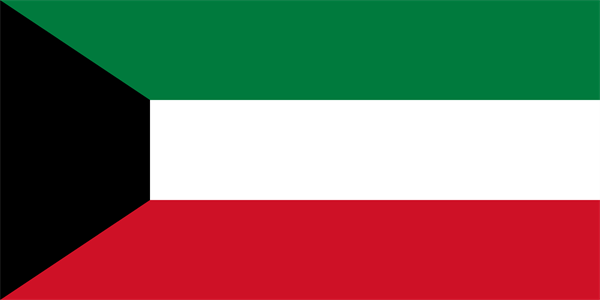
Kuwait's four colours linked the country to the shared Arab colours with independence.
- Adopted and changed
- Adopted on 7 September 1961; first official raising on 24 November 1961.
Design
Horizontal stripes of green, white and red, with a black trapezium at the hoist.
What it means
The colours belong to the Pan-Arab tradition. In a frequently used poetic explanation, white evokes good deeds, green evokes the lands, black evokes battles, and red evokes swords and courage.
The story
Kuwait's older flags mostly carried a red field and marks such as the name of the country. When independence was gained in 1961, a new design was adopted. This change shows a turn from the traditional red banners of the Gulf towards the colours of a wider Arab identity. The black trapezium at the hoist sets it apart from other flags with similar colours.
Flag of Bahrain
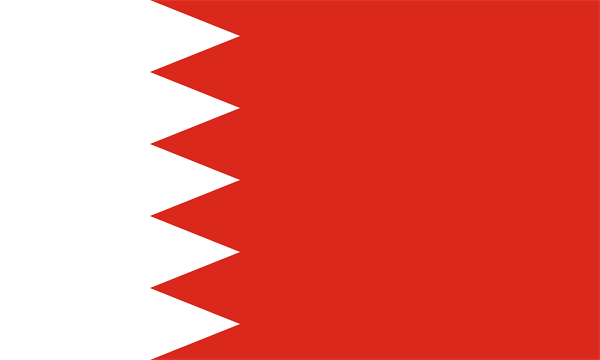
Bahrain's five points set it apart from similar Gulf flags.
- Adopted and changed
- Current five-point design, 14 February 2002
Design
A red field; a white stripe at the hoist ending in five white triangular points.
What it means
The five points are linked with the five pillars of Islam. Red comes from the old banner tradition in the Gulf; the white stripe was added in the context of historical maritime and peace agreements.
The story
In Bahrain, plain red flags were used first, then flags with a white stripe. Over time the border between the two colours became serrated and the number of points changed. In 2002 the current design with five points, and its proportions, were set. Today's appearance is the simplified final stage of a long maritime flag tradition.
Flag of Qatar
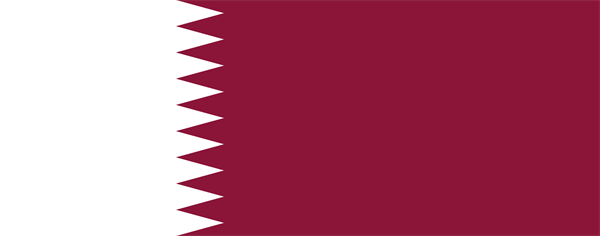
Qatar's dark maroon sets it apart among the red flags of the Gulf.
- Adopted and changed
- The present basic form dates from 1960; it has continued since 1971, the period of independence.
Design
A maroon field with a white stripe at the hoist joined by nine points.
What it means
White is explained as peace, and maroon as sacrifice in past struggles. In the official historical account, the nine points are linked to Qatar's relationship with the Gulf emirates bound by treaties; they do not count today's administrative regions.
The story
Qatar's flag developed from older red and white Gulf banners. The local tradition of dyes and fabric holds an important place in the identity of the dark maroon colour. Earlier examples had writing and extra shapes, while the plain present form was reached in 1960. With independence in 1971, the same basic design continued.
Sources: diwan.gov.qa, Flags of the World (specialist archive)
Flag of the United Arab Emirates
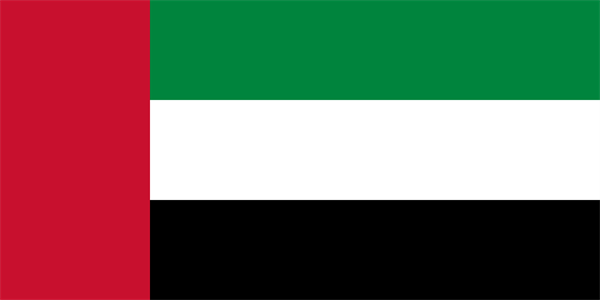
Four colours represent a new federation and a shared Arab culture.
- Adopted and changed
- 2 December 1971
Design
A red vertical band on the hoist side; beside it, horizontal stripes of green, white and black.
What it means
In the official presentation, green stands for hope and prosperity, white for peace and honesty, black for determination and strength and the defeat of enemies, and red for courage. The colours of the design were inspired by the shared tradition of colours in Arabic poetry.
The story
Abdullah Mohammed Al Maainah's design was chosen in a competition held before the United Arab Emirates was founded. The flag was raised on 2 December 1971 with the proclamation of the federation. The designer has said that he was inspired by a poem by Safi al-Din al-Hilli that describes deeds, battles, lands and swords through colours. This origin makes it easier to understand why the same colours are seen on other Arab flags.
Sources: protocol.dubai.ae, u.ae
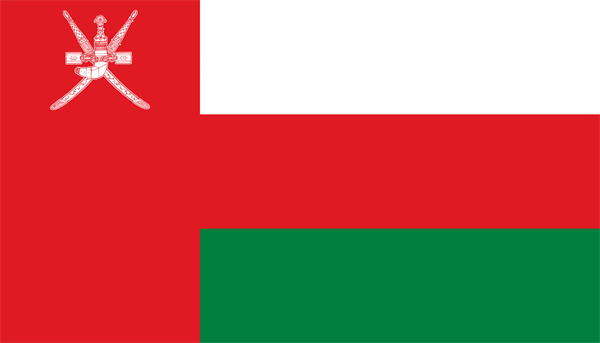
Flag of Oman
Oman's flag combines the old red banner with white and green.
- Adopted and changed
- 1970; current stripe layout 1995
Design
A red vertical stripe at the hoist with the white state emblem; beside it, horizontal stripes of white, red and green.
What it means
White represents peace and prosperity, green the fertile lands, and red historical struggles. The emblem in the corner consists of a traditional dagger and belt placed over two crossed swords.
The story
In the new period of government in 1970, two colours and the state emblem were added to the plain red flag. The 1995 regulation made the horizontal stripes equal in width. In this way continuity was kept between the old maritime banner and the new state design.
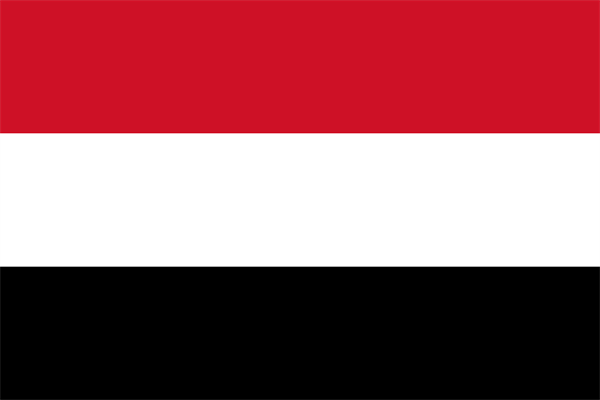
Flag of Yemen
Yemen's plain three colours symbolise the union of two states.
- Adopted and changed
- 22 May 1990
Design
Three equal horizontal stripes of red, white and black; no emblem in the centre.
What it means
The Arab liberation colours are used. In the common explanation, red stands for the struggle for independence, white for a bright future, and black for oppression in the past.
The story
When North Yemen and South Yemen united in 1990, the red, white and black stripes shared by both flags were kept. The star of the north and the triangle and star of the south were not carried into the new joint flag. The result was a plain tricolour that tells the story of the union.